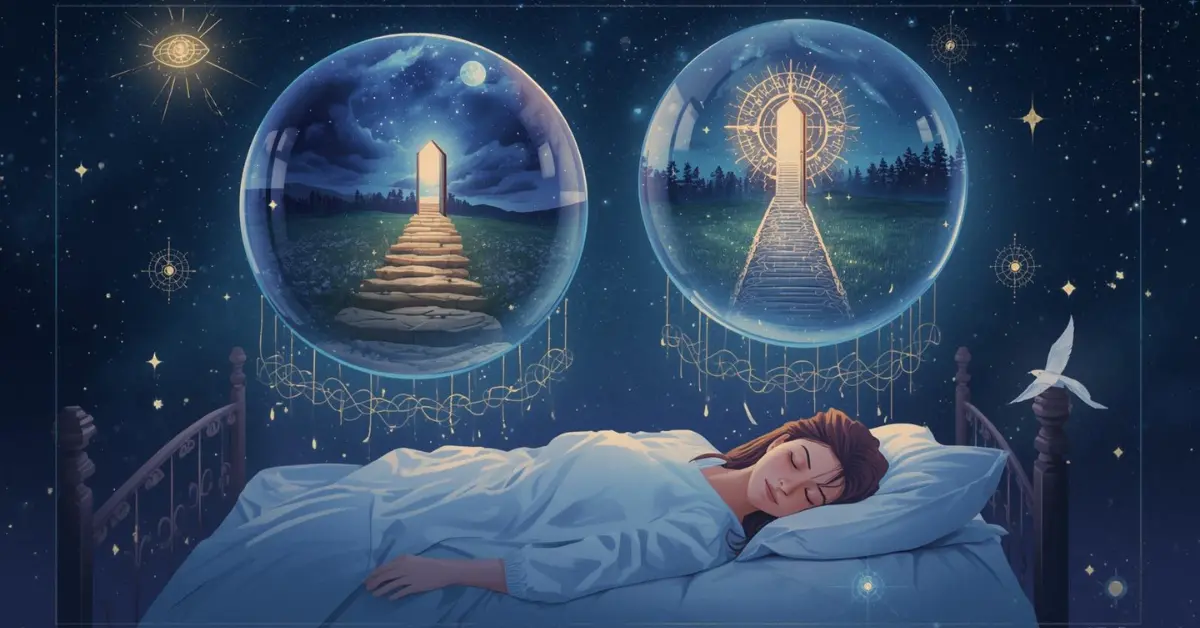
Have you ever woken up from a dream only to find yourself living the same dream again, almost scene by scene, as if your subconscious hit the replay button? You’re not alone. Many people experience recurring dreams, sometimes multiple times, and these experiences often carry more significance than we realize.
While some dismiss it as the brain processing daily life or stress, the spiritual and psychological dimensions of dreaming about having the same dream twice reveal deeper insights into our emotions, life path, and inner world.
In this article, we’ll explore the spiritual meaning behind experiencing the same dream more than once, examine psychological perspectives, cultural interpretations, chakra connections, real-life stories, and provide guidance for navigating these mystical messages.
Dream Symbolism from Psychology + Spiritual Side
From a psychological perspective, recurring dreams are often reflections of unresolved issues, repeated thought patterns, or emotional conflicts that your subconscious wants you to notice. Psychologists suggest that when a dream repeats itself, it may be signaling:
- Unprocessed emotions – fear, guilt, anxiety, or longing can manifest in repeated dream scenarios.
- Life lessons – your subconscious may be highlighting patterns that need reflection or change.
- Cognitive rehearsal – your mind may be preparing you for real-life situations by simulating scenarios in dreams.
On the spiritual side, having the same dream twice is often considered a message from the universe, your higher self, or spiritual guides. These dreams are not random—they carry subtle signals meant to direct your path, awaken intuition, or indicate alignment (or misalignment) with your true purpose. Common spiritual interpretations include:
- Call for attention – your soul is urging you to notice a life lesson you may be overlooking.
- Validation of intuition – recurring dreams can confirm that your inner guidance is steering you correctly.
- Spiritual awakening – repeated dreams sometimes occur during periods of transformation or heightened awareness, nudging you to embrace change.
In essence, psychology explains the mechanics, while spirituality emphasizes the message and transformative potential of repeated dreams.
Cultural Dream Interpretations
Across cultures, recurring dreams are often seen as more than mere coincidence—they are messages from beyond the ordinary. Here are a few notable cultural interpretations:
- Ancient Egyptian perspective: Dreams were considered visits from the gods or the soul’s journey into the spiritual realm. Recurring dreams were believed to carry urgent guidance from deities or ancestors.
- Native American beliefs: Dreams are a vital connection to the spirit world. Experiencing the same dream twice may indicate guidance from spirit animals or ancestors, warning or preparing the dreamer for a life event.
- Eastern traditions (Hinduism & Buddhism): Recurring dreams are often linked to karma, unresolved desires, or spiritual lessons. They encourage mindfulness and reflection to release attachments or negative patterns.
- Western folklore: In some European traditions, recurring dreams were thought to be prophetic, revealing warnings about future events or important personal insights.
Cultural interpretations reinforce the idea that repeated dreams are meaningful, urging dreamers to pay attention to their symbolism, timing, and emotional resonance.
Connection to Chakras or Emotional Blockages
In the spiritual healing world, recurring dreams can indicate energy imbalances or blocked chakras. Dreams are often a mirror of your inner energetic state, and repeating dreams highlight areas that require attention.
- Root Chakra (Muladhara): Recurring dreams about danger, insecurity, or being trapped may indicate a blocked root chakra, pointing to feelings of instability or fear in your waking life.
- Sacral Chakra (Svadhisthana): Dreams involving relationships, creativity, or pleasure that repeat might signal suppressed emotions or a need to reconnect with your creative self.
- Solar Plexus Chakra (Manipura): Repetitive dreams about control, power struggles, or self-doubt can indicate blocked personal power and confidence.
- Heart Chakra (Anahata): Dreams revisiting heartbreak, loss, or unresolved emotional connections suggest blocked heart energy that requires compassion and forgiveness.
- Third Eye Chakra (Ajna): Recurring visionary or symbolic dreams often involve this chakra, pointing to intuitive messages, heightened awareness, or spiritual guidance needing attention.
By reflecting on the emotional themes and images in your repeated dreams, you can identify where energy healing, meditation, or inner work might bring balance and clarity.
Real-Life Examples of This Dream Experience
To better understand the significance of having the same dream twice, consider these real-life scenarios:
- Career Anxiety: A young professional repeatedly dreams of missing an important presentation. Psychologically, it reflects fear of failure. Spiritually, it may encourage reflection on whether their current path aligns with their true purpose.
- Relationship Reflection: A woman dreams twice about a recurring argument with a close friend. This may indicate unresolved emotions or the need to address communication issues in her waking life.
- Symbolic Messages: A man dreams twice of walking through a door that never opens. Spiritually, this can symbolize blocked opportunities, urging him to seek new paths or inner growth.
- Life Transitions: During periods of change, recurring dreams often appear as gentle warnings or guidance. For instance, someone about to move to a new city might repeatedly dream of lost items, signaling the need for preparation and letting go of attachments.
These examples show how repeated dreams can operate on multiple levels—emotional, practical, and spiritual—guiding you toward awareness and action.
FAQs
1. Is it normal to have the same dream twice?
Yes, it is common. Dreams often repeat when your mind or soul wants to bring attention to a specific unresolved emotion, fear, or life lesson.
2. Can recurring dreams predict the future?
While not always literal, recurring dreams can offer intuitive insights. Many spiritual traditions consider them subtle guidance about potential outcomes or choices.
3. How can I interpret a recurring dream?
Reflect on the emotions, symbols, and scenarios in the dream. Ask yourself what it might represent in your life and what lesson your subconscious is emphasizing.
4. Does dreaming the same dream mean something negative?
Not necessarily. Repeating dreams are not always ominous—they can be opportunities for growth, self-discovery, and alignment with your life path.
5. Can meditation or journaling help with recurring dreams?
Absolutely. Dream journaling allows you to track patterns and decode messages, while meditation or chakra balancing can release emotional blockages that may be causing the repetition.
Closing: Reassurance + Reflection Advice
Experiencing the same dream twice is not something to fear. It is a gentle invitation from your subconscious and your spiritual guides to pause, reflect, and gain clarity. If the dream nudges you toward healing, decision-making, or self-discovery, it is a sign that your inner world is active and attentive to your growth.
To embrace these messages:
- Keep a dream journal to capture recurring themes and emotions.
- Practice mindfulness or meditation to listen to your intuition.
- Explore chakra balancing to release energetic blockages.
- Reflect on life choices and patterns that the dream may highlight.
Your repeated dream is a sacred echo of your soul, a reminder that the answers you seek are often already within you. By tuning into these messages with curiosity and compassion, you can transform repetition into revelation and insight into action.

Hi, I’m Luca-Jay, founder of Dreamsignx.com. I specialize in dream interpretation, helping people uncover the spiritual, emotional, and symbolic meaning behind their dreams. Through my work, I guide others to understand their subconscious, gain clarity, and connect with their life path.





 Welcome to